
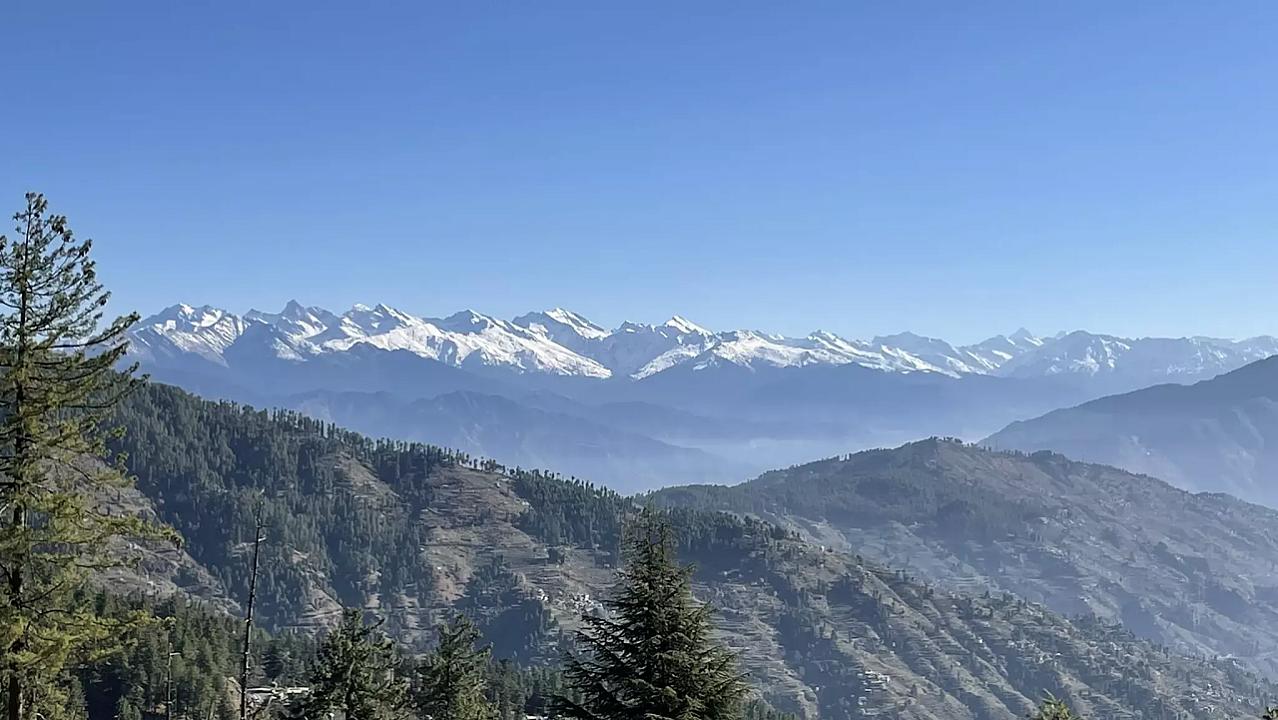
In a remote corner of Himachal Pradesh lies Dodra Kwar, a valley so isolated it has lived by its own rules, governed not by clocks but by the will of its deities. For centuries, its secrets were guarded by the formidable [Chanshal Pass], a high-altitude fortress that becomes snowbound for half the year. This natural barrier created a cultural sanctuary, preserving a unique way of life, a resilient architectural heritage, and a profound connection to the land.
The construction of the first motorable road over the pass in 2009 marked a pivotal moment, placing this ancient world at a fragile crossroads between a self-sufficient past and an uncertain, modern future. This is the story of Dodra Kwar—a world on the cusp of transformation.
A World Apart: Geography, History, and Identity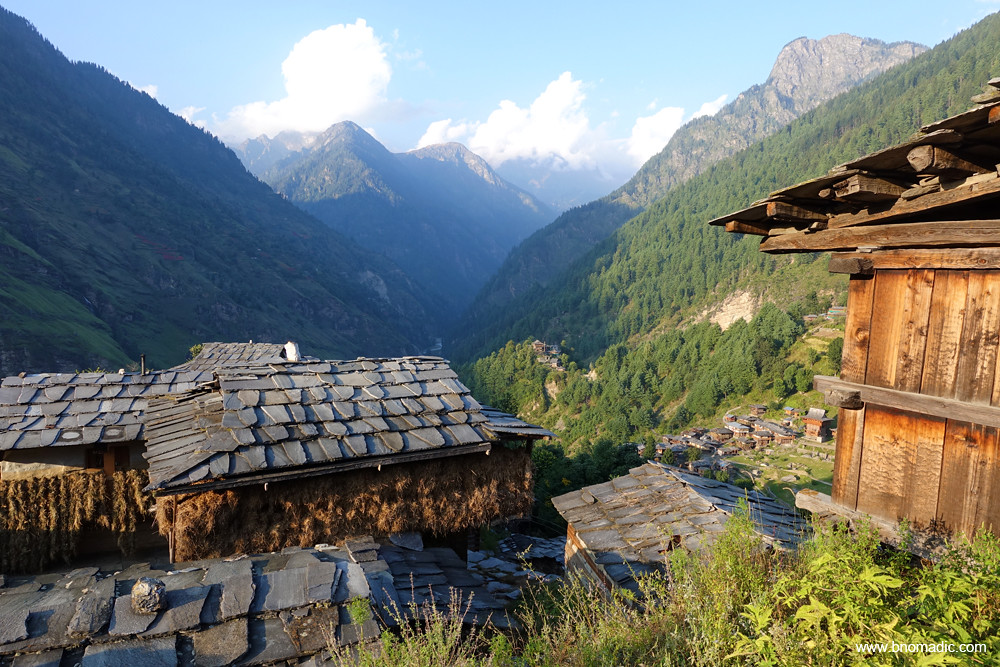
The story of Dodra Kwar is inseparable from its geography. Located in the northeastern reaches of the Shimla district, its principal villages, Dodra and Kwar, are perched on opposite slopes of the roaring Rupin River. The only way in is via a treacherous, mostly unpaved 80-90 km road from the town of Rohru, which can take up to nine hours to navigate. From mid-November to mid-March, heavy snow renders the Chanshal Pass impassable, cutting the valley off completely. This profound isolation has been the primary architect of its identity. Historically a frontier territory passed between Himalayan kingdoms, the people of Dodra Kwar have a legacy of fierce independence, marked by revolts against feudal rule. In modern times, its remoteness made it a dreaded "punishment posting" for government officials, which unintentionally minimized external interference and allowed its indigenous systems to flourish.
Today, the community is in a complex struggle for official recognition. Despite possessing all the characteristics of a tribe—a unique dialect, culture, and territory—its bid for Scheduled Tribe (ST) status was rejected by the central government. This has fostered a narrative of marginalization and a continuing fight for identity within the framework of the modern state.
A Living Heritage: Faith, Architecture, and Daily Life
Life in Dodra Kwar is a closed, sustainable loop where faith, architecture, and livelihood are inextricably linked.
Devtantra: The Rule of the Gods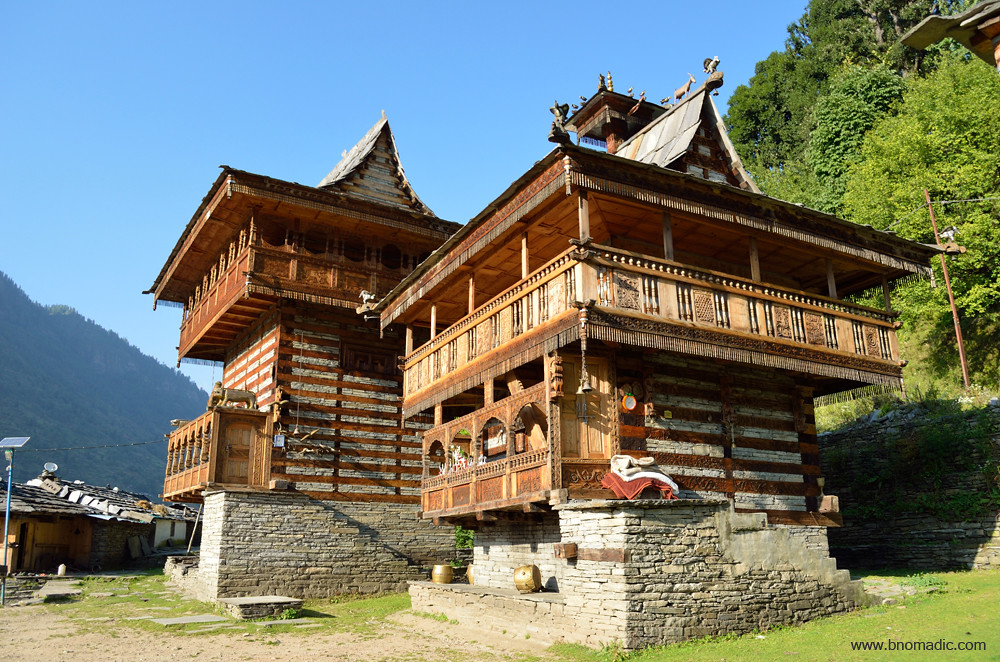
The true governing force in the valley is Devtantra, the rule of the gods. Here, local deities like the powerful Kwar Jakh and the forest guardian Jakh Devta are the ultimate arbiters of justice. Villagers turn to a shaman or oracle (Gur) to resolve disputes, resulting in one of the lowest crime rates in Himachal. This system of divine law has also created powerful conservation tools, such as sacred groves where felling trees is forbidden, creating pristine biodiversity sanctuaries. The faith is celebrated through vibrant events like the Bhoj festival, a community-wide celebration with traditional feasting and dance.
Kath-Kuni: The Art of Survival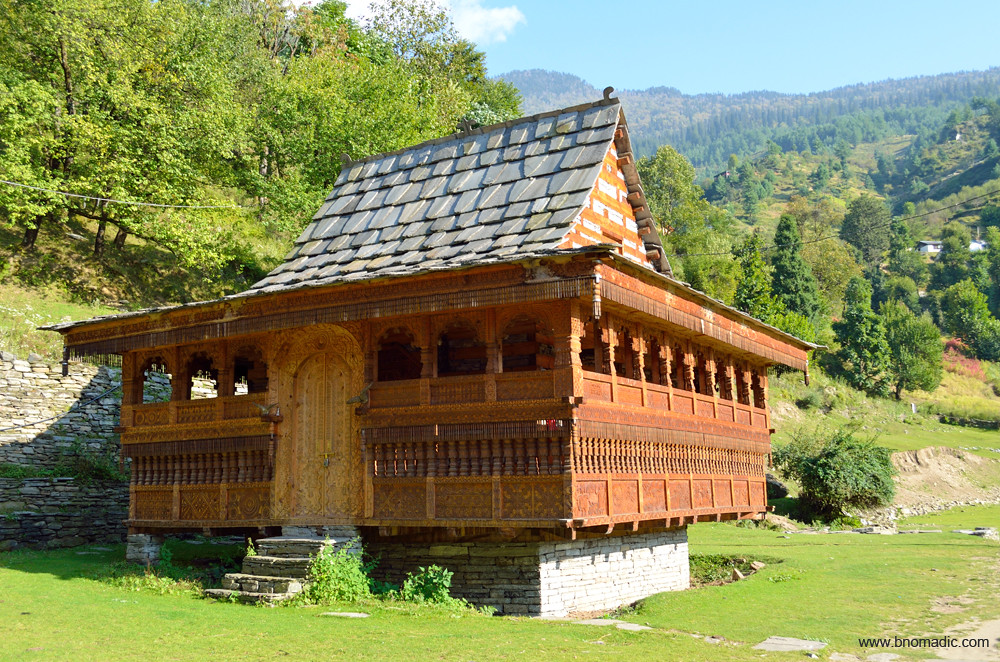
The villages are living museums of Kath-Kuni architecture. This ancient technique uses alternating layers of stone and deodar wood beams without any mortar. The intricate, nail-less joinery creates a flexible structure that is remarkably resistant to earthquakes—a critical feature in this seismic zone. The thick walls also provide excellent thermal insulation against the harsh winters. This indigenous science, born from local materials and centuries of wisdom, is a testament to a life lived in harmony with a challenging environment.
A Self-Sufficient Rhythm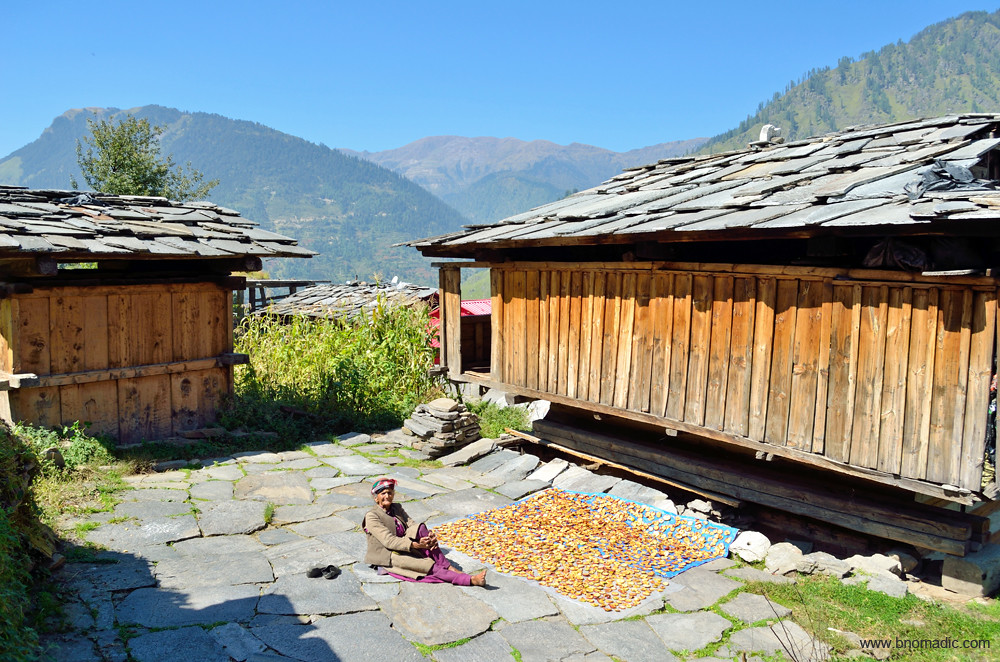
The valley practices 100% organic farming out of necessity and tradition. The lack of a road made chemical fertilizers inaccessible, and the land’s natural fertility, enriched by livestock manure, had no need for them. The cuisine is hyper-local, featuring steamed bread (Siddu), rotis from local grains like buckwheat (Fafra), and dishes made from the vibrant red Amaranth (Chollai) that colors the fields. While agriculture is for subsistence, apple cultivation provides a key source of cash income, supplemented by animal husbandry and the collection of medicinal herbs.
Essential Travel Guide
A trip to Dodra Kwar is an expedition, not a casual holiday. It requires preparation, respect, and an adventurous spirit.
1. Best Time to Visit: The road is only open from May to October. September and October offer clear skies and stunning post-monsoon landscapes.
2. Getting There: Take the daily HRTC bus or a high-clearance private taxi from Rohru. Be prepared for a long and bumpy ride.
3. Accommodation: Options are extremely basic and limited. There is a PWD guesthouse in Kwar (book in advance) and simple rooms at local dhabas in Dodra. Camping is possible but requires caution due to wildlife.
4. Connectivity & Supplies: Expect to be completely offline. BSNL is the only network with a sporadic signal. The last ATM, market, and medical facilities are in Rohru. Carry snacks, a water filter, and a first-aid kit.
5. What to Do: The main attraction is cultural immersion. Engage respectfully with locals, visit the ancient temples, and admire the architecture. For trekkers, the valley is the gateway to the famous Rupin Pass trek.
Conclusion: A Valley at the CrossroadsDodra Kwar is a precious repository of Himalayan culture, preserved by its isolation. But the new road, while a lifeline, places this timeless valley on the precipice of change. The prospect of tourism and development offers economic opportunity but also threatens to erode the very authenticity that makes the valley so unique. The future of Dodra Kwar depends on a mindful approach. It is a call for respectful, sustainable tourism that honors this fragile cultural ecosystem, ensuring its powerful stories of faith, survival, and harmony can continue to be told for generations to come.


 10% OFF
 5% OFF
 5% OFF